
If you commute in Illinois—whether that means a daily Chicago “L” ride, a Metra train into the city, or a long drive on the Kennedy Expressway—you already know the soundtrack of your journey isn’t exactly a choice. It is the screech of train brakes, the rumble of freight locomotives, road noise from trucks, and the general hum of a city that never sleeps. Active Noise Cancellation (ANC) headphones are not a luxury here; they are a sanity-saving necessity. The challenge is sorting through dozens of models to find the right pair that balances battery life, comfort, and noise-blocking power for your specific routine. This guide cuts through the noise to help you identify the best Illinois commuting ANC headphones, focusing on real-world conditions like brutal winters, long battery drain, and the need for reliable call quality.
Key Takeaways
- Identify your commute type first: Train commuters need maximum noise reduction for low-frequency rumble, while drivers need transparent modes and wind-noise reduction, not just heavy ANC.
- Battery life is non-negotiable: Illinois commutes often exceed two hours round-trip; look for a minimum of 24 hours of battery with ANC enabled to avoid mid-week charging anxiety.
- Multipoint connectivity matters: Switching seamlessly between your work laptop and personal phone is essential for commuters who take calls on the go.
- Cold weather durability is key: On-ear and over-ear models are generally better suited for harsh Illinois winters than in-ear models, which can stiffen in the cold.
- Don’t confuse ANC with soundproofing: ANC cannot block sharp, sudden noises like a station announcement bell; look for models with “Transparency” or “Awareness” modes to hear those critical alerts.
Why Standard Quiet Isn’t Enough for Illinois Transit
Living in Illinois means dealing with a specific audio environment. The “L” trains generate a distinctive high-frequency screech on sharp curves that slips past standard passive isolation. Meanwhile, Metra diesel locomotives create a constant low-frequency drone that feels like it sits in your chest. A basic pair of noise-isolating earbuds won’t cut it; you need active noise cancellation that targets these specific frequency bands. High-end ANC systems use multiple microphones to generate inverse sound waves, effectively nullifying the rumble of the train and the hum of highway traffic. However, understanding the difference between passive and active isolation is the first step in choosing a pair that actually works for your commute, not just one that looks good in a marketing photo.
Key Features to Prioritize for the Illinois Commuter
Not all ANC headphones are created equal, and features that matter for commuters in Illinois differ from those needed by frequent flyers or office workers. Focus on these critical specifications to narrow down your choices effectively.
Battery Life and Charging Speed
A long commute on the Blue Line from O’Hare to Forest Park takes roughly 45 minutes, but your daily round trip plus lunchtime errands can easily total three hours of listening. With that in mind, you need a headphone that can survive a full work week on a single charge. Look for models offering at least 30 hours of playback with ANC on. Equally important is quick-charge support. If you forget to charge overnight, a “5 minutes for 4 hours” fast-charge feature is a lifesaver before you run to catch the 7:15 AM train. In-ear models often have charging cases that add 20–30 hours of extra battery, making them a strong option for convenience.
Comfort and Fit for Long Wear
Illinois commutes are not ‘quick hops.’ You will be wearing these headphones for extended periods. Over-ear models need plush memory foam earcups that don’t clamp too tightly, especially if you wear glasses. In-ear models must come with multiple ear tip sizes to ensure a secure fit; a loose seal dramatically reduces bass response and ANC efficiency. If you are commuting during the summer heat, over-ear headphones can get sweaty, so look for breathable fabric rather than pleather. Consider weight, too—a heavy headphone will cause neck fatigue by the end of the week,For frequent flyers and long-distance commuters upgrading their audio gear, check out our guide on the Best Bose QuietComfort Headphones for Travel This Year.
Call Quality and Microphone Performance
Taking a call on a windy platform or a noisy bus is a test of a microphone’s beamforming ability. Look for headphones with multiple microphones that specifically filter out background noise. Features like “crystal-clear calling” or “wind noise reduction” are not just marketing jargon; they are essential for IL commuters who need to take business calls while walking from Union Station to the office. If you plan to use the headphones for video meetings, ensure the microphone quality is acceptable for conferencing software, not just casual phone calls.
Over-Ear vs. In-Ear: Weighing Your Options
Your choice between over-ear headphones and earbuds will significantly impact your daily experience. Both have distinct advantages and drawbacks for the Illinois commuter.
The Case for Over-Ear Headphones
Over-ear cans, or circumaural headphones, have the advantage of larger drivers and better passive isolation. Listeners generally prefer over-ear models for the most effective ANC, as they physically surround the ear and block out the loud ambient settings of a train yard. They also typically house larger batteries, often providing double the listening time of earbuds. For the cold Illinois winter, over-ear headphones provide welcome warmth. However, they are bulky. They take up significant space in a backpack and can be uncomfortable in the summer.
The Case for True Wireless Earbuds
In-ear models are all about portability and comfort. They slip into a pocket-sized charging case, making them ideal for commuters who bike or run to catch the bus. Modern earbuds, like those from Sony and Bose, now offer ANC that rivals older over-ear models. The trade-off is battery life—usually around 6–8 hours in the buds themselves—and a smaller driver that often lacks the raw bass power of their over-ear counterparts. Additionally, if you drop a small earbud on the train platform, finding it can be difficult, especially in snow or slush.
Wind Noise Reduction and Transparency Modes
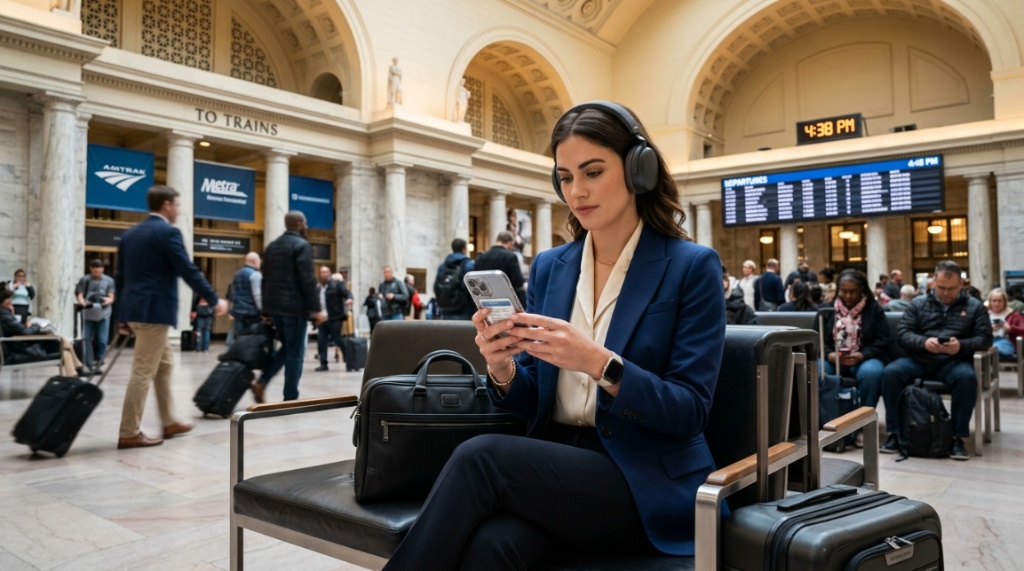
While blocking out the train is good, blocking out the world can be dangerous. Simultaneously, wind noise is the primary enemy of ANC. The microphones used to cancel environmental noise can be overwhelmed by gusts of wind, creating a popping or whooshing sound in your ears. Illinois is notoriously windy, especially near the lakefront. When choosing Your headphones, check for a wind-reduction mode. This usually involves disabling certain microphones or adjusting the algorithm to ignore wind patterns. On the opposite end, you need a good Transparency or Ambient mode. This lets you hear the announcer say “Doors closing” or an approaching bike on the hybrid trail. The best models let you adjust how much outside sound you let in, giving you control over your environment without completely isolating you from it.
Multipoint Connectivity for Work and Play
As a commuter, you are likely carrying multiple devices—a laptop, a personal phone, and maybe a work phone. Pairing your headphones to two devices simultaneously (multipoint) is not a “nice-to-have”; it’s a time-saver. It allows you to be watching a video on your laptop but automatically switch to your phone when a call comes in. This eliminates the frantic process of disconnecting and reconnecting your audio devices when you step off the train and into a meeting. When evaluating specs, look specifically for “Multipoint” or “Connect to two devices simultaneously.” Some products only connect to one source at a time, which can be a significant workflow bottleneck.
Top Recommendations and Price Ranges
After scrutinizing the technical specifications and user feedback, a few models consistently rise to the top for Illinois-specific conditions. While there is no single ‘best’ model, these options offer specific strengths that cater to different commuter preferences and budgets.
| Model Type | Category | Best For | Key Consideration |
|---|---|---|---|
| Sony WH-1000XM5 | Over-Ear | Noise cancellation supremacy with AI-driven features for busy Chicago trains. | Pricier than older models, but the microphone clarity on calls is stellar. |
| Bose QuietComfort Ultra | Over-Ear | All-day comfort and immersive spatial audio for long suburban commutes. | Excellent build quality, though the carry case is somewhat bulky. |
| Apple AirPods Pro 2 | In-Ear | Seamless integration with iPhone and excellent Adaptive ANC. | Battery life is limited to 6 hours; you will depend on the case for refills. |
| Sennheiser Momentum 4 | Over-Ear | Superior sound quality for music lovers and astonishing 60-hour battery life. | Wind noise reduction is good but not as robust as the Sony or Bose. |
| Jabra Elite 8 Active | In-Ear | Rugged durability with high water and dust resistance for unpredictable weather. | ANC is solid but not the top tier; focuses more on balanced sound. |
Common Mistakes When Buying ANC Headphones
There are several pitfalls that Illinois commuters frequently encounter. Avoiding these will save you time and money.
- Choosing sound quality over ANC strength: You might love the bass of a certain pair, but if they don’t block the train rumble, they are useless for commuting. Prioritize ANC quality over high-fidelity audio for daily travel.
- Ignoring the ANC “Off” mode: Some headphones sound terrible with ANC turned off, showing you how much the DSP affects the music. If you use your headphones in quiet places to save battery, a poor “Off” mode could be annoying.
- Forgetting about case portability: Buying a pair of bulky headphones that doesn’t fit in your work bag is a common mistake. Always measure your bag’s compartments against the dimensions of the charging case.
- Not testing on a call: Try the headphones with your phone’s native call app. Voice quality for the person on the other end is just as important as what you hear. A microphone that picks up the train noise is a deal-breaker.
Frequently Asked Questions
Is it safe to wear ANC headphones while driving in Illinois?
It is safer to use ANC headphones in “Transparency” mode, but wearing any headphones over both ears while driving is illegal in Illinois. You can use earbuds in one ear, but over-ear and on-ear headphones are prohibited for drivers to keep them aware of emergency vehicles.
Can I use ANC headphones on the airplane without paying for the premium over-ear models?
Yes, in-ear wireless earbuds offer significant noise reduction for flying, though they generally do not cancel as much low-frequency engine roar as high-end over-ear models. For a comfortable flight, consider over-ear cans for their superior seal and passive isolation.
Will cold weather in Illinois drain my headphone battery faster?
Yes. Lithium-ion batteries are sensitive to low temperatures, and you may notice a faster drainage rate if you use them outdoors for extended periods in 20°F weather. Store them in an inner jacket pocket to keep them warm and conserve battery life.
How do I clean the ear cushions on my ANC headphones?
Remove the ear cushions and earcups from the drivers. Wipe them down with a damp cloth and mild soap if necessary. Avoid submerging them in water. Let them air dry completely before snapping them back onto the headphones.
Do ANC headphones lower audio quality?
Most modern ANC headphones process the signal digitally, even when ANC is off. High-quality models implement this DSP to tune the sound. However, budget models may suffer from a “recessed” audio quality when ANC is enabled, affecting the soundstage and clarity.
Conclusion
Finding the right commuter headphones in Illinois is about more than just buying the most expensive set on the shelf; it’s about matching the technology to your specific travel environment. Whether you prioritize call clarity, ruggedness for the weather, or the absolute maximum noise cancellation to block out the “L”, focus on the practical features that impact daily use—battery life, wind resistance, and comfort. By prioritizing these factors, you can turn your daily commute from a stressful encounter with urban noise into a private escape. Start by identifying your primary needs, set a realistic budget, and choose the pair that best enhances your journey through the Prairie State.